7 Overlooked Heritage Landmarks That Define North Vancouver’s Unique History

Did you know that North Vancouver once housed the largest sawmill in the entire British Empire? Long before the condos of Lower Lonsdale dominated our skyline, the Moodyville settlement was the industrial powerhouse of the West Coast. In fact, North Vancouver was the first spot in the region to have electricity and a telephone exchange—beating out both Vancouver and Victoria to the punch. Our community wasn't just a suburb; it was the original hub of innovation on the North Shore.
Understanding where we came from helps us appreciate the specific character of our streets today. We aren't just living in a collection of postal codes; we’re walking through a living record of shipbuilders, loggers, and pioneers who saw something special in these mountains. It’s easy to walk past a brass plaque or an old stone foundation without a second thought, but these sites are the glue that holds our local identity together. We’ve put together a list of the landmarks that truly tell the story of North Vancouver.
What makes the Moodyville legacy so significant for North Vancouver?
If you head down to the foot of Moody Avenue, you’re standing on the birthplace of our city. While most people think of Lonsdale as the heart of town, Moodyville was the real deal back in the 1860s. It was a company town (and a strictly dry one at that) centered around the massive Sewell Moody sawmill. The community here was remarkably diverse for its time, with workers from all over the world coming to North Vancouver to process the giant timber that built much of early San Francisco and even parts of China. Today, the Moodyville Park area has seen massive redevelopment, but the name reminds us that our roots are deep in the timber industry.
We can still see traces of this era if we look closely at the trail systems connecting the park to the Spirit Trail. The way the land was tiered to accommodate the mill workers' cottages still defines the slope of the neighbourhood. It’s a reminder that the physical layout of North Vancouver was dictated by industry long before urban planners arrived with their drafting tables. The grit of those early mill workers is part of our DNA.
Which North Vancouver buildings survived the Great Fire era?
While the Great Fire of 1886 wiped out most of Vancouver across the water, North Vancouver remained a sanctuary of early architecture. One of the most striking examples is St. Paul’s Catholic Church on West Esplanade (located within the Squamish Nation’s Mission Reserve No. 1). Built in 1884, its twin spires are an iconic part of our waterfront view. It’s the oldest surviving church in the Lower Mainland and stands as a testament to the early cooperation and complex history between the Sḵwx̱wú7mesh (Squamish) people and the settlers who arrived here.
Walking past the church today, you can't help but feel the weight of the decades. The Gothic Revival style is a sharp contrast to the modern glass towers just a few blocks away. It serves as a visual anchor for our community, reminding us that North Vancouver has always been a place of meeting and exchange. We see this history reflected in the nearby MONOVA: Museum and Archives of North Vancouver, where the stories of our early residents are carefully preserved for future generations.
How did the shipyards shape our modern North Vancouver identity?
You can’t talk about North Vancouver without mentioning the Burrard Dry Dock. During World War II, this site was the busiest shipyard in Canada, employing over 14,000 people—men and women alike—who worked around the clock to build Victory ships. The massive crane that still stands at The Shipyards isn't just a piece of metal; it’s a monument to the industrial effort that defined North Vancouver for most of the 20th century. The Pipe Shop, now a popular event venue, was once a hive of activity where workers bent massive steel tubes for the hulls of naval vessels.
We’ve done a great job of repurposing these spaces, but we shouldn't forget the noise and the heat that once filled Lower Lonsdale. The transition from a heavy industrial waterfront to a public gathering space is one of the most successful chapters in North Vancouver’s history. When we grab a coffee at Lonsdale Quay and look out at the water, we’re seeing the same view those shipyard workers saw—minus the smoke and the clanging of hammers. You can find more about the heritage registry of these sites on the City of North Vancouver website.
1. The Lonsdale Avenue Streetcar Remnants
Until 1947, streetcars were the primary way we moved around North Vancouver. The lines ran from the ferry wharf all the way up to Lonsdale and 25th, and even branched off to Lynn Valley. While the tracks were mostly paved over, you can still feel the "streetcar hum" in the wide layout of Lonsdale Avenue. The old car barns were located near 3rd and Lonsdale, and if you look at the curb heights and the way the older storefronts are positioned, you can see how they were designed to welcome passengers stepping off the tracks. It’s a bit of transit history that explains why our central corridor is so walkable today.
2. The Mollie Nye House in Lynn Valley
Up in the District, the Mollie Nye House stands as a survivor of the early 1900s. Built in 1913 by Jack Nye, it represents the residential expansion of North Vancouver into the foothills. Mollie Nye was a dedicated teacher who lived there for decades, and the house now serves as a community centre. It’s a classic example of the "Upper Lonsdale" style of architecture that predates the post-war bungalow boom. It’s one of those spots where you can truly step back in time and imagine what it was like when Lynn Valley was mostly thick forest and logging camps.
3. The Grand Boulevard Heritage Houses
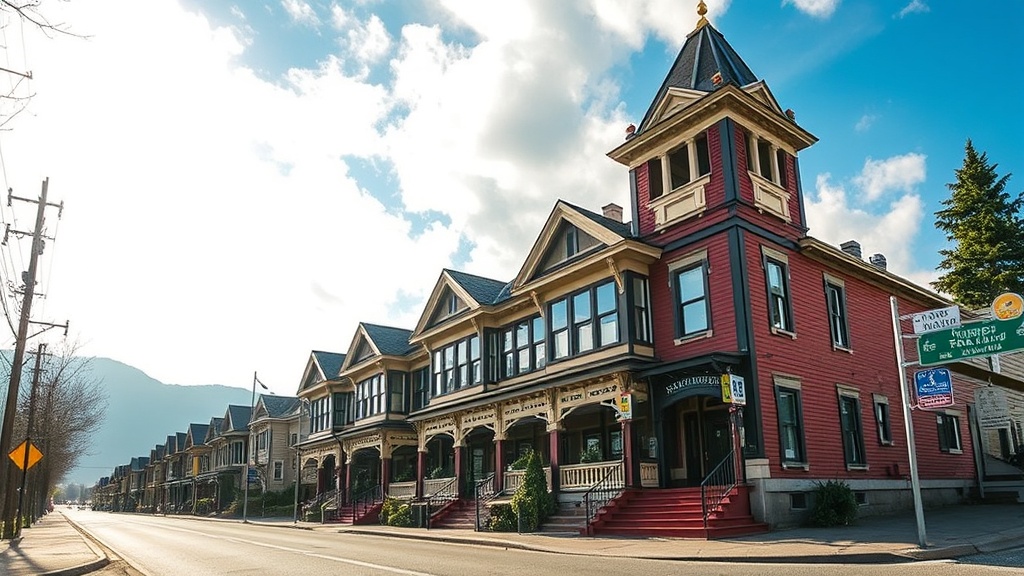
Grand Boulevard was designed in 1906 to be the "Champs-Élysées of the North Shore." This long, green parkway was intended to attract the wealthy elite to North Vancouver. Many of the homes lining the boulevard are on the heritage register, featuring stunning Craftsman and Edwardian details. Walking the length of the boulevard from Keith Road up to 19th Street gives us a clear look at the architectural ambitions of our early city founders. These houses aren't just pretty to look at—they represent the first major real estate boom in our community’s history.
4. The First Narrows Bridge Gateway
While we usually just call it the Lions Gate Bridge, the North Vancouver side of the crossing holds significant historical markers. Before the bridge opened in 1938, the only way across the Inlet was by ferry. The construction of the bridge completely changed the pace of life in North Vancouver, turning us from a semi-isolated industrial town into a connected part of the larger region. The stone cairns and the original approach roads are still visible if you explore the trails near the bridge footings. For a detailed list of heritage sites in the District, check out the District of North Vancouver heritage page.
5. The Low Level Road Foundations
The Low Level Road has always been a vital artery for North Vancouver, connecting our eastern neighbourhoods to the city centre. If you walk along the Spirit Trail, you can see the massive old concrete retaining walls and foundations from the early 20th-century rail expansions. These structures were built to support the heavy trains carrying grain and lumber to the ports. They are a physical reminder of the sheer engineering will it took to build a city on a steep mountain slope. We often take our roads for granted, but in North Vancouver, every flat surface was a hard-won victory over the terrain.
6. The Versatile Pacific Shipyard Buildings
Beyond the main shipyard area, several smaller buildings tucked away near the waterfront served as machine shops and drafting offices. These structures—with their distinct industrial windows and corrugated siding—are the last remnants of the "working" waterfront that hasn't been turned into glass-fronted retail. They remind us that North Vancouver has always been a place where things are made, fixed, and launched. Protecting these buildings is about more than just saving old wood; it’s about honoring the specialized skills that defined our local workforce for generations.
7. The Keith Road Stone Bridges
Keith Road was one of the first major east-west connectors in North Vancouver, and the stone work on the bridges crossing the local creeks—like Mahon Creek—is some of the finest in the city. These bridges were built to last, using local granite and traditional masonry techniques. They connect our neighbourhoods in a way that feels organic and permanent. When we drive over them today, we’re using the same infrastructure that the very first North Vancouver residents used to get their horses and buggies across the ravines. It’s a small, quiet piece of history that we interact with almost every day without noticing.